
Mixed Feelings of TCKs
There are moments when two opposite feelings can exist at the same time.
Not because you are confused, but because both are true.
For many third culture adults, this can feel like a quiet push and pull within. A wanting and a hesitation. A reaching and a holding back.
This is often the experience of ambivalence. Ambivalence is the capacity to hold two conflicting feelings at once. It is not a flaw or something to fix. It is a reflection of having lived across different worlds, where more than one reality can exist at the same time.
For third culture adults, ambivalence can become a familiar way of being.
You have learned to:
see multiple perspectives
adapt to different environments
hold complexity without immediate resolution
And so, it makes sense that your inner world might reflect that same duality.
Ambivalence often carries two things at once:
a longing for connection, clarity, or belonging
a need for protection, space, or self-preservation
Both are meaningful.
Both are trying to care for you.
Rather than choosing one side, you might begin by noticing:
What is this part of me longing for?
What is this part trying to protect?
Here are 8 co-existing truths that TCKs often wrestle with and what each communicate about desire and fear.
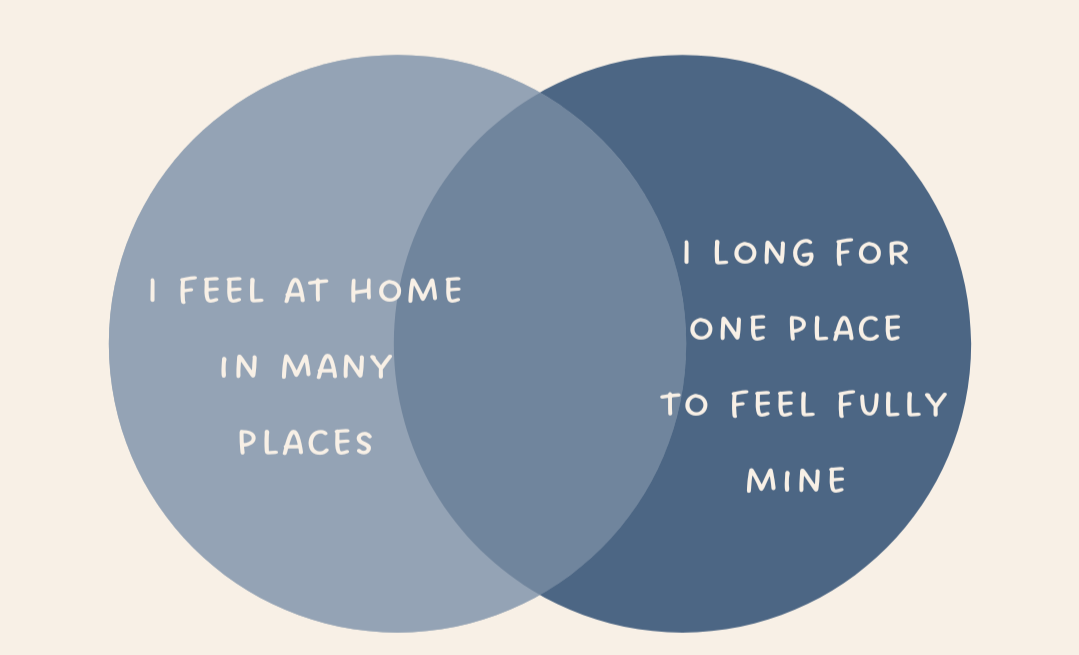
I feel at home in many places AND I still long for a place that feels fully mine
The desire: To feel rooted somewhere.
The fear:
That no place will ever hold you completely.
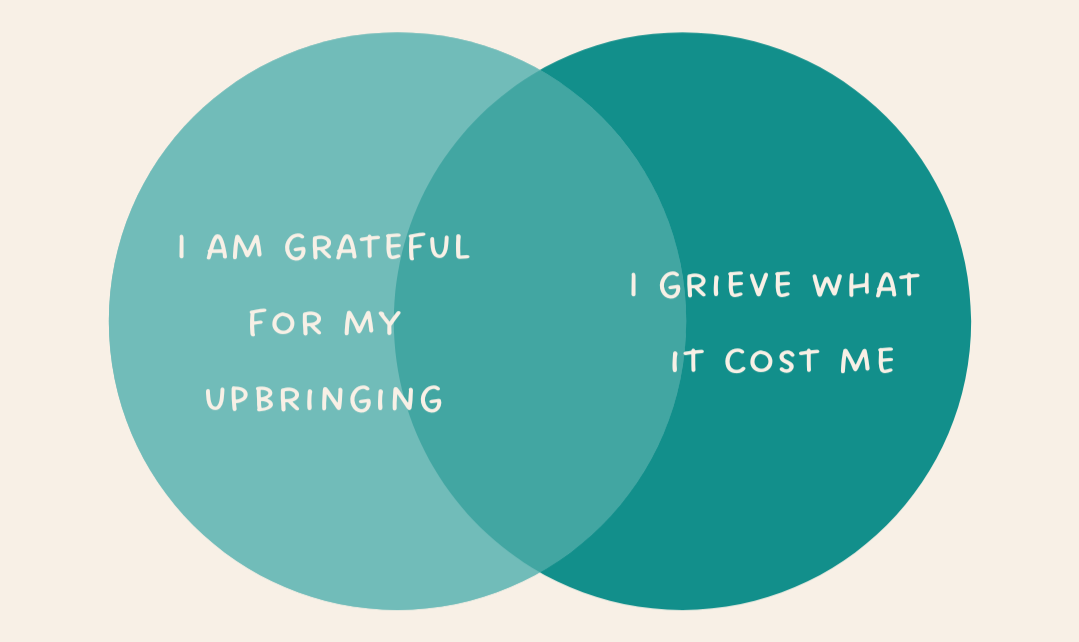
I am grateful for my upbringing AND I grieve what it cost me.
The desire:
to honor and stay connected to what was meaningful, formative, or beautiful about your upbringing.
The fear:
that acknowledging the grief, loss, or pain might feel disloyal, ungrateful, or undo the good that was there too.
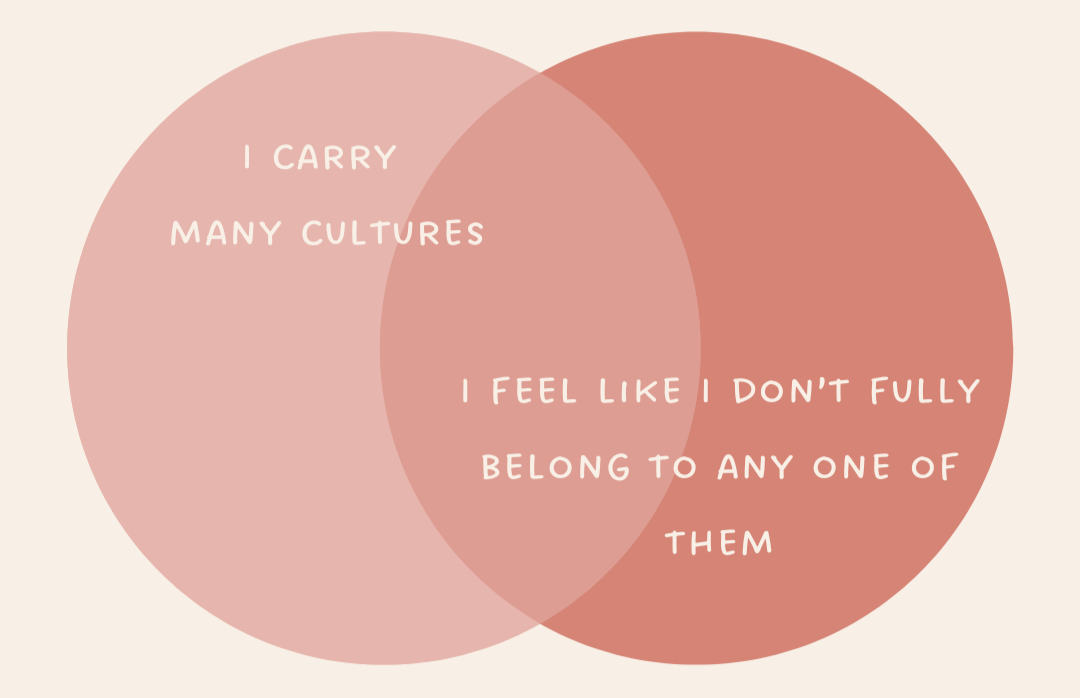
I carry many cultures AND I feel like I don’t fully belong to any one of them.
The desire:
to feel fully held, recognized, and rooted within the fullness of your identity.
The fear:
that no single place, culture, or community will fully claim or understand all parts of you.
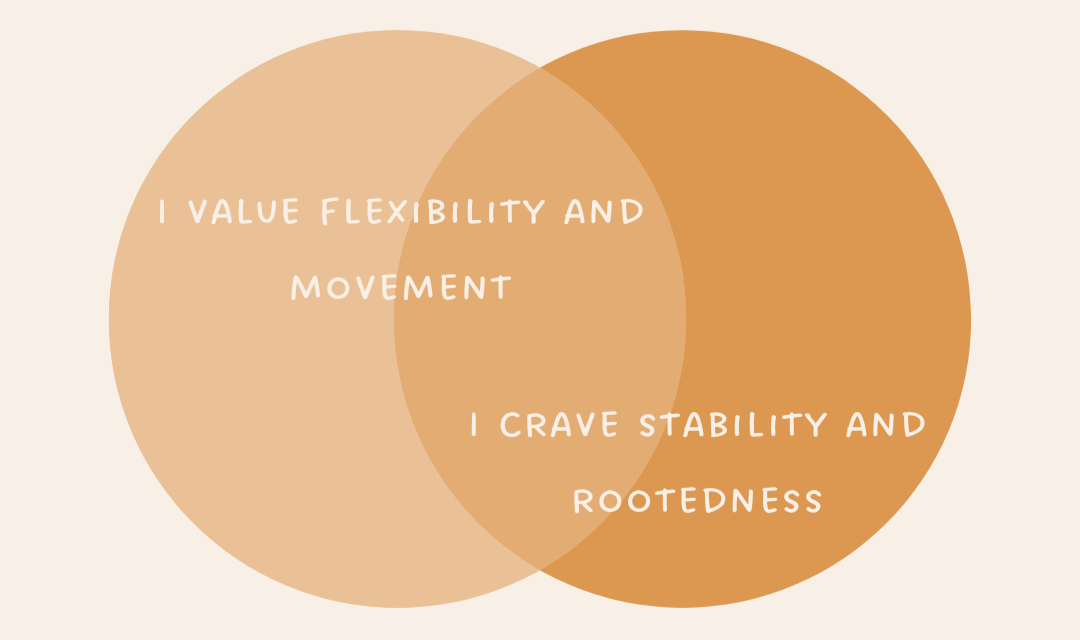
I value flexibility and movement AND I crave stability and rootedness
The desire:
for freedom, growth, and the ability to move expansively through different worlds.
The fear:
that staying too long may lead to feeling trapped, while constant movement may keep you from ever fully settling or belonging.
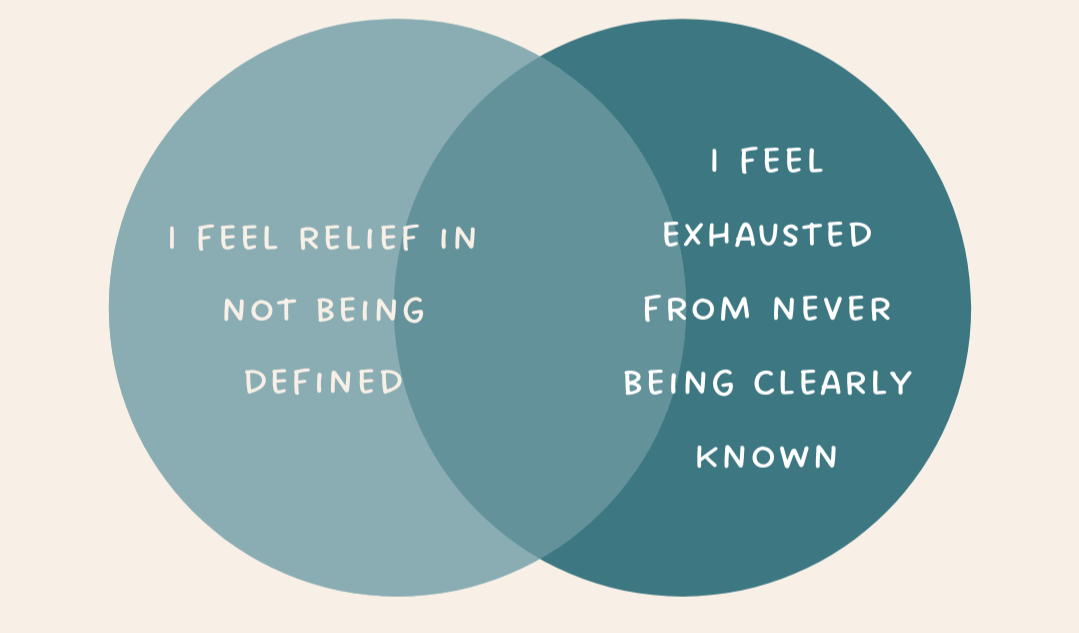
I feel relief in not being defined AND I feel exhausted from never being clearly known
The desire:
for freedom from being reduced, boxed in, or oversimplified. To share the depth and context of your story.
The fear:
that constantly remaining undefined may leave you feeling unseen, unanchored, or difficult to fully know.
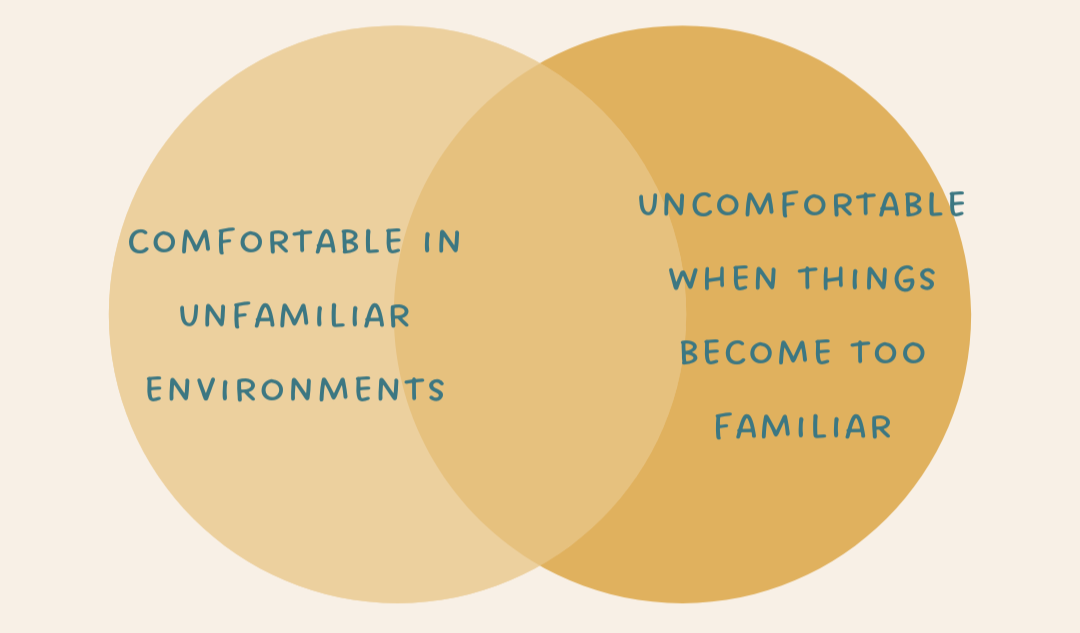
Comfortable in unfamiliar environments AND uncomfortable when things become too familiar
The desire:
For openness, movement, and the sense of possibility that comes with new environments.
The fear:
that familiarity may bring expectations, permanence, or vulnerability that feels harder to navigate.
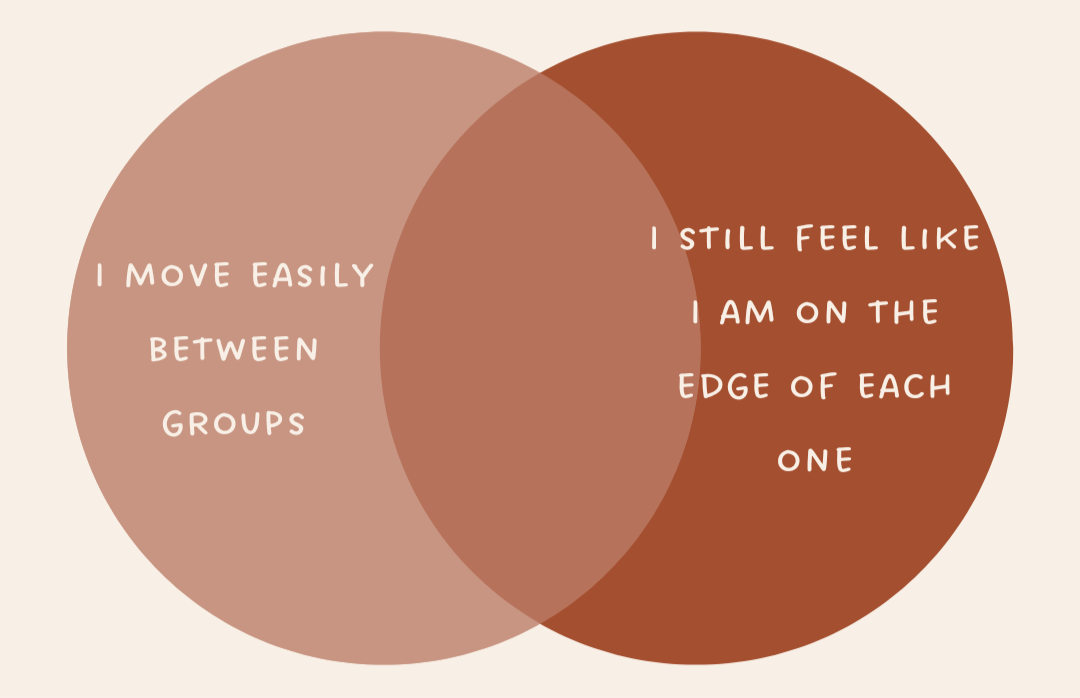
I move easily between groups AND I still feel like I am on the edge of each one
The desire:
to connect, adapt, and find belonging
The fear:
that despite being welcomed in many places, you may never feel fully claimed, rooted, or entirely understood in any one of them.
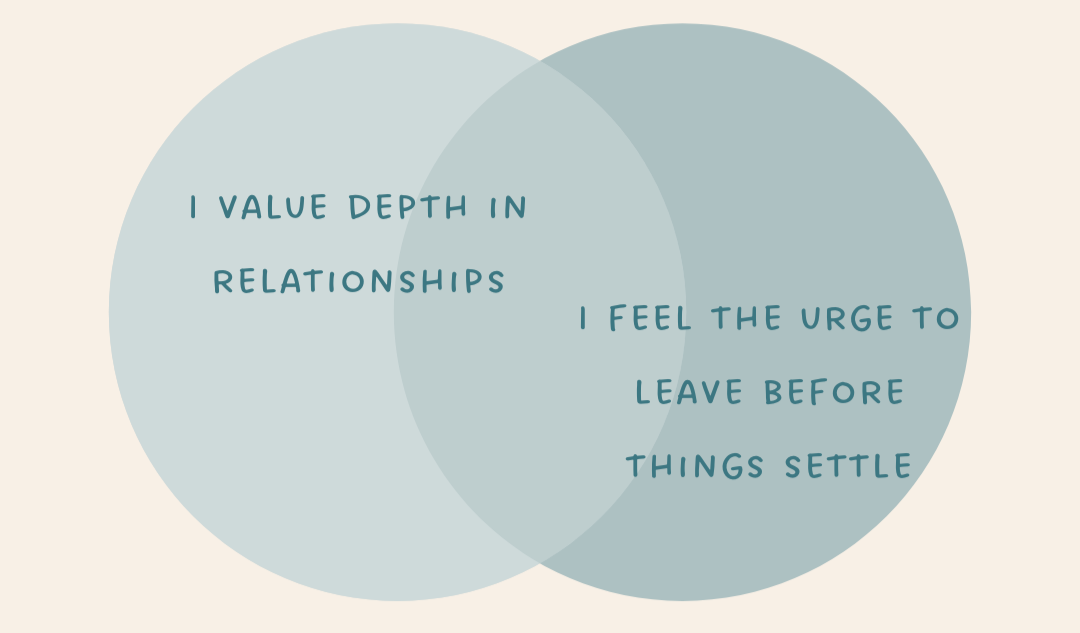
I value depth in relationship AND I feel the urge to leave before things settle.
The desire: for deep connection, intimacy, and relationships that feel safe enough to fully rest in.
The fear: that staying too long may lead to disappointment, loss, or the pain of eventually having to leave or be left.
_________
When both are allowed to exist, something begins to shift.
Not because the tension disappears—
but because you are no longer pushing part of yourself away.
Ambivalence is not a sign that you are stuck. It may be a sign that you have the capacity to hold complexity, to live between experiences, without needing to collapse them into one.
And over time, this can become something that feels less like conflict,
and more like depth.
In my counseling and coaching work with adult TCKs and multi-heritage folks, this is something we often explore. If this resonates and you want space to explore any of these mixed feelings, please reach out.