
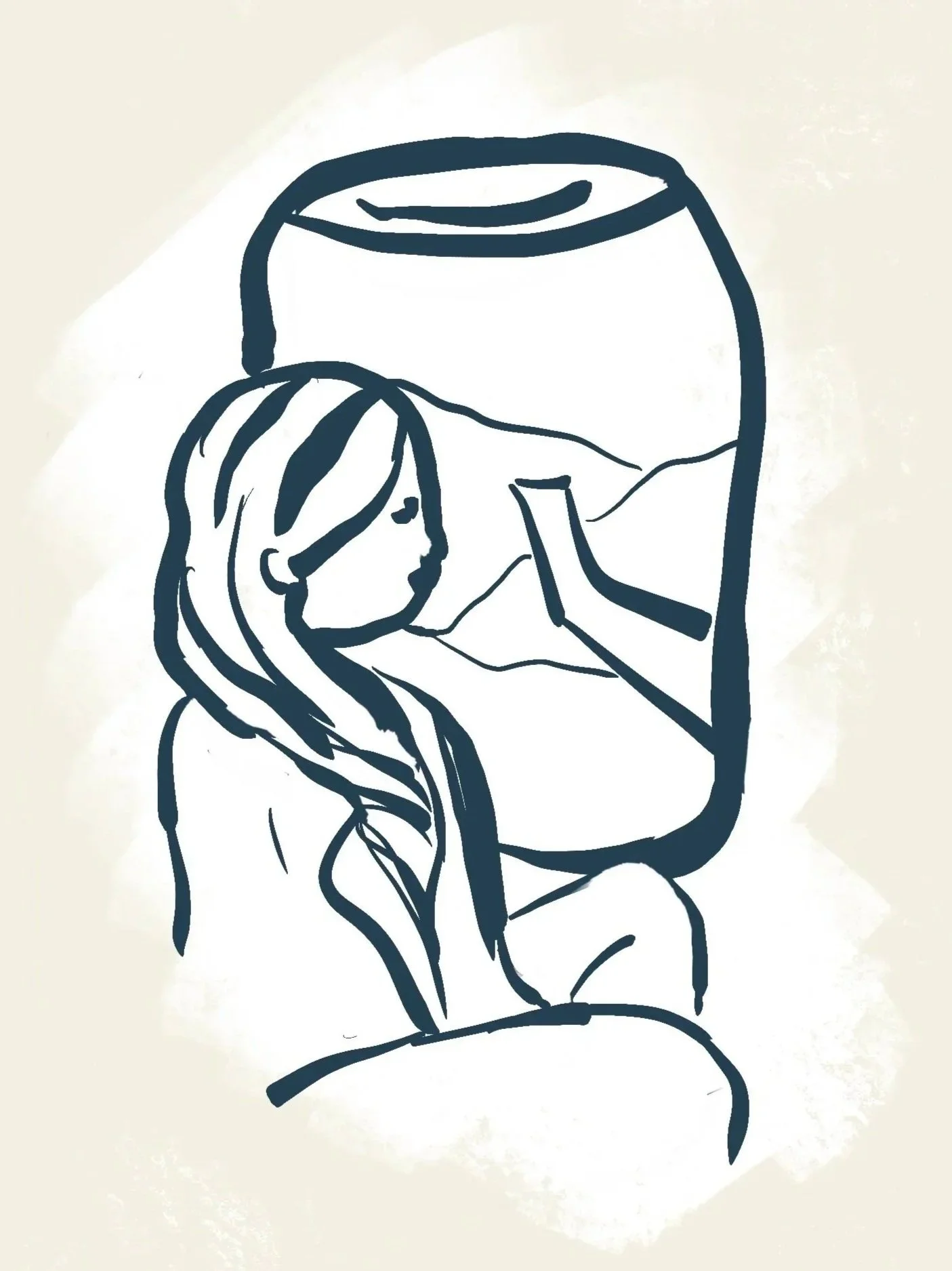
Illustration of a girl looking out an airplane window while flying.
5 Myths of the TCK Grief process
TCK (Third-culture-kid) grief is one of those things that can be hard to synthesize, because it was formed across many places rather than one. There was no single moment to grieve, only a quiet layering of too many goodbyes. It's a feeling, it is a process, it can feel life long. It is the grief of ambiguous loss and unsaid goodbyes. It is a feeling of deep longing and voidness like Hansel and Gretal being lost in the woods or of chaos and spinning of Dorothy’s house in a tornado. Working with TCK clients, here are 5 common myths I have come across.
Myth #1: If I start crying I won’t stop crying.
Many of my clients shy away from the grieving process out of fear that if they let the tears come, they may never end. But when grief is avoided, it can quietly become generational trauma, extending emotional suffering, often because there was never permission to honor their story with tears. Grieving transforms the pain into a story that we can tell without breaking us. And while we might be left with a little tender rawness, with care and containment, to be honest I haven’t found myself or any client unable to stop crying completely. You will not always feel this way.
Myth #2: If I saw the transition or loss coming, this goodbye would not have been as painful.
As TCKs, sometimes we idealize that if we had just been prepared enough, the impact wouldn’t have been so intense. For anyone who has lived between worlds, this thinking may have come from us wanting the world to feel more predictable, and to have less sudden and unexpected loss. But being prepared may not spare us completely from the feelings of loss. We feel the depth of loss because these people, places, and times mattered so deeply.
Myth #3 If I don’t get attached, I won’t have anything to grieve.
TCKs often get stuck in this fallacy because it truly would feel easier. Grief actually lets us be more tender and open to others. It can feel vulnerable and tender. We may be tempted to compartmentalize our grief, pretending it doesn’t impact us. This might emerge as some form of avoidant attachment where it is difficult to let others in with fear that we would have to one day, unexpectedly let go. To care deeply is to open ourselves up to connection.
Myth #4 I have to choose all-in or all-out, one culture or the other, or one feeling to land in.
This thinking often comes when we expect ourselves to codeswitch immediately, (code-switching being our ability, and super power :) ), but not needed in every stage of transition. As someone so familiar with the in-between, what if we don’t have to choose just one feeling? In counseling, we offer a place to build your tolerance to hang out in both/and: both anger and sadness, both relief and heart ache, longing and gratitude. When we don’t simplify our grief it gives us permission to change our mind and honour the complexity of all of what we feel.
Myth #5 There is a perfect way to leave or say goodbye.
Oh believe me, I am so guilty of believing this myth sometimes. I have told myself the same thing when I can’t help but feel like I should be an expert by now. When we let each loss, transition, and goodbye be what it needs to be, flow with the emotion that comes up, our nervous system softens.
Grief doesn’t ask us to be resolved. Our grief asks us to show up imperfect, complex, and human.
Can you relate to any of these myths about TCK grief?
“My grief says that I dared to love, that I allowed another to enter the very core of my being and find a home in my heart. Grief is akin to praise; it is how the soul recounts the depth to which someone has touched our lives. To love is to accept the rites of grief.”
-Francis Weller-
In counseling we honour this truth, that grief is not a weakness. Grief does not operate like a test we have studied for. TCK grief often becomes clearer when it is spoken aloud. If you’d like support exploring the losses woven into your story, counseling can offer a place to gather the pieces.